
Cheapest Ketamine Therapy in 2026: Treatment Under $300/Month
Ketamine Therapy Cost in 2026: What Patients Should Know Before Comparing Prices
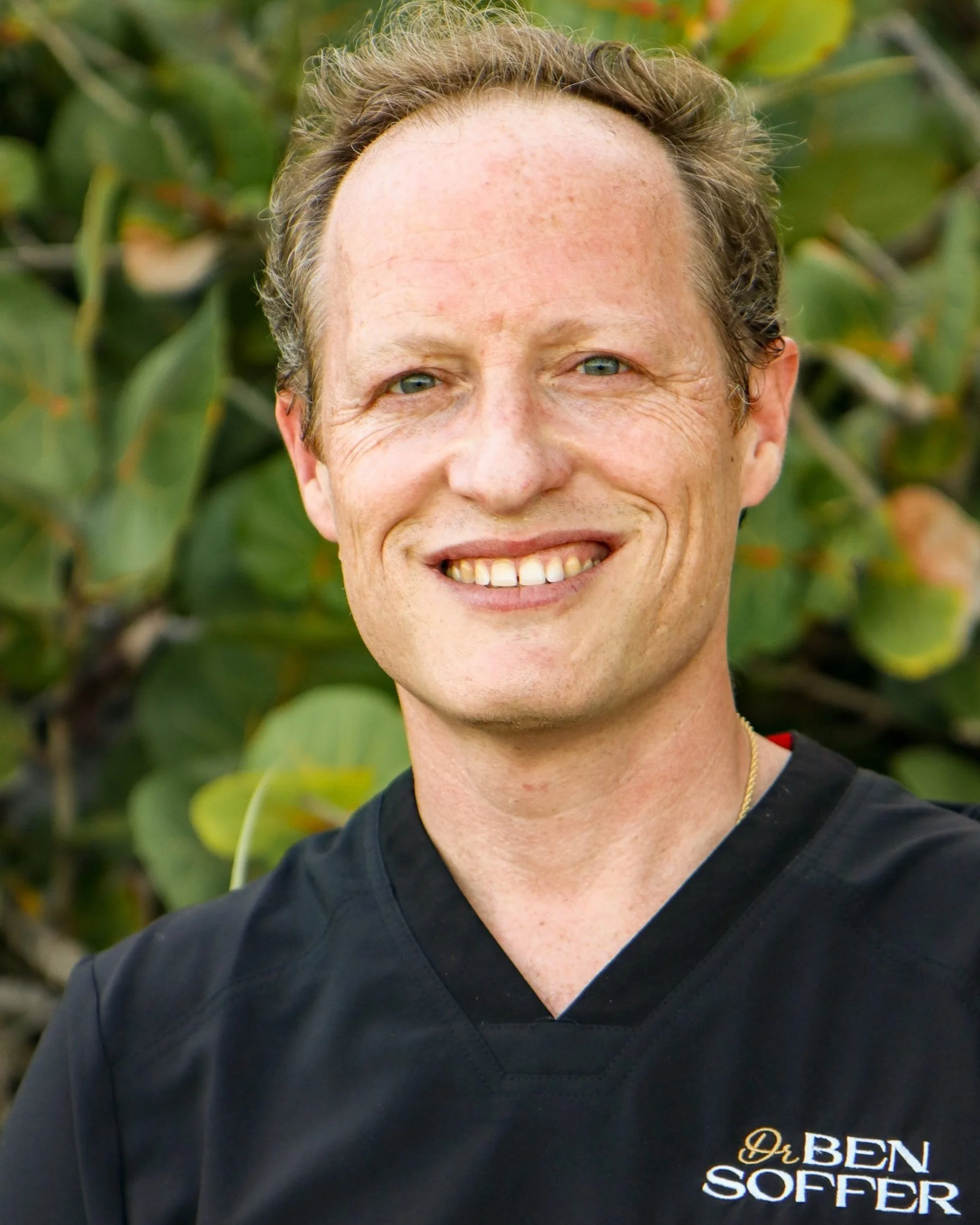
Medically reviewed by Dr. Ben Soffer, DO. Dr. Soffer is a board-certified physician licensed in Florida, New Jersey, and California who personally reviews and treats every Discreet Ketamine patient. He wrote and reviewed this guide to help patients weigh cost against clinical quality.
Ketamine has one of the better-studied rapid-acting profiles in modern psychiatry. A small controlled trial first documented its antidepressant effect in 2000 (Berman et al., 2000), a landmark randomized trial confirmed rapid improvement in treatment-resistant major depression in 2006 (Zarate et al., 2006), and a two-site randomized controlled trial replicated the finding in 2013 (Murrough et al., 2013). In 2019 the U.S. Food and Drug Administration approved esketamine, a nasal-spray form marketed as Spravato, for treatment-resistant depression (FDA; Daly et al., 2018). A meta-analysis has also found that a single dose can rapidly reduce suicidal ideation (Wilkinson et al., 2018).
Most patients who pursue ketamine therapy have treatment-resistant depression, usually defined as an inadequate response to two or more antidepressant trials. It is increasingly used under physician supervision for anxiety, PTSD, and certain chronic-pain conditions as well. Session-based therapeutic dosing has the strongest evidence base; daily sub-therapeutic "microdosing" is a newer, less-proven model.
Cost varies widely by format. At-home telehealth programs range from about $129 per month for daily microdosing to roughly $250 to $500 per month for physician-led session-based at-home treatment. In-clinic intravenous ketamine can run $10,000 to $30,000 a year, and cash-pay Spravato $14,000 to $24,000. Compounded ketamine is off-label and is not billed to insurance; Spravato is the FDA-approved exception with an insurance pathway. If you see compounded ketamine advertised below $129 a month, or "free with insurance," treat it as marketing spin rather than a real program.
The rest of this guide breaks down the legitimate low-cost options, how to use HSA and FSA dollars, where it is safe to cut costs and where it is not, and how the major providers actually compare on price and clinical model.
The cheapest and most affordable legitimate options
Joyous: $129/month (daily microdose model)
Joyous prescribes a low daily dose of ketamine, usually 15 to 75 mg, taken every day rather than in weekly therapeutic sessions. The clinical evidence behind daily microdosing is much thinner than the evidence for session-based therapeutic dosing. What Joyous has going for it is price. At $129 a month it is the cheapest program I know of, roughly half what session-based care runs.
What you get for $129/month:
- Network clinician oversight (a different clinician at intake than at follow-up)
- Daily sub-therapeutic ketamine medication
- Simple titration based on response
- Available in 30+ states
Where it's thinner:
- Daily dosing raises long-term tolerance and dependence questions that session-based protocols avoid by design
- The mechanism that produces the durable antidepressant effect, the neuroplasticity window driven by therapeutic-dose BDNF release, may not be reliably triggered at sub-therapeutic doses
- In 2026 this is still an open clinical question, not a settled one
I'd point a patient here when symptoms are chronic but mild-to-moderate, when cost is the one constraint that decides everything, and when they understand they are accepting an unproven long-term model. It is the wrong choice for severe treatment-resistant depression or PTSD that warrants therapeutic-dose sessions.
Discreet Ketamine: $250/month (physician-led session-based)
Discreet Ketamine operates in Florida, New Jersey, and California only and is priced at $250 per month for physician-led session-based at-home treatment, among the lowest I have seen for that model. It uses single-physician continuity, meaning one doctor reviews every patient across the whole treatment arc. Because this is my own practice, I have kept the entry here factual and put the full details, pricing, and how to start toward the bottom of this guide.
Better U: $300-500/month (mid-priced session-based)
Better U runs as a budget alternative to Mindbloom in the session-based at-home market: network clinicians, structured guided sessions, integration content. I mention it mainly for patients in states where Discreet Ketamine doesn't operate who still want session-based dosing at the lower end of the national-network market.
Mindbloom first month deal (~$500 for 6-session course)
Mindbloom's introductory pricing for a first 6-session induction course averages about $80 to $100 per session. After induction, ongoing maintenance runs lower per session but isn't bundled at the same rate. It's worth a look if you want a structured guided-session program with strong integration content and are willing to commit to one course before deciding on longer-term treatment.
The "free with insurance" pitfall
Some online providers advertise treatment as "covered by insurance" or "free with eligible plans." For compounded ketamine, the at-home format, that is almost never true.
- Insurance carriers don't cover off-label compounded medications for psychiatric indications. That is built into how U.S. health insurance works, not a loophole waiting to be found.
- Programs that claim coverage on compounded ketamine are misrepresenting how billing actually works. The patient usually ends up with the bill after the marketing-stage "estimate."
- The one real exception is Spravato, the FDA-approved esketamine nasal spray, which does have an insurance pathway with prior authorization. But Spravato is given in a certified clinic. It isn't at-home compounded ketamine, even though the two share a molecule name.
If a program quotes you a covered or near-zero price for compounded ketamine, get the full payment terms in writing before you agree to anything. In my experience the actual cash-pay cost lands in the ranges above.
How to use HSA/FSA to reduce out-of-pocket cost
Physician-supervised ketamine therapy for a diagnosed mental-health condition qualifies as a medical expense you can pay for with HSA and FSA funds. That covers both the clinical care fees and the pharmacy medication.
Here's the math on a typical year:
- $250/month clinical care × 12 months = $3,000 in annual clinical cost
- Reimbursed through an HSA at a 22% federal bracket, that's $660 back in tax savings
- Net effective cost: $2,340 instead of $3,000
Higher brackets save more. If your HSA comes with employer matching, the effective cost drops further still.
In practice:
- Most legitimate programs take HSA/FSA cards directly at checkout
- For the ones that don't, you file reimbursement claims with receipts and a physician treatment plan, and the program can supply that documentation
- Pharmacy receipts for the compounded ketamine itself also qualify
For the full walkthrough, including the Letter of Medical Necessity, the 2026 contribution limits, and exactly which costs qualify, see our HSA/FSA guide for ketamine therapy.
Veterans: the cheapest pathway often runs through VA care
Veterans with treatment-resistant depression may qualify for Spravato through VA medical centers at no out-of-pocket cost beyond standard VA copays. The East Orange and Lyons VAs in New Jersey, along with the major Florida VAs, offer Spravato at certified facilities.
Eligibility: a TRD diagnosis, documented failure of two prior antidepressant trials, and approval through the VA's clinical pathway.
The tradeoff is time. Spravato requires twice-weekly clinic visits during induction, roughly two hours each, which is hard to sustain for a working veteran. At-home compounded ketamine through Discreet Ketamine costs $250/month but skips the clinic time.
For more, see our Florida veterans page or New Jersey veterans page.
Where it's safe to cut costs vs. not
Safe cost-reduction strategies:
A few of these I actively recommend:
- Use HSA/FSA funds: direct tax savings, no clinical compromise
- Choose a 6-month or annual prepayment at programs offering bulk discounts (10% off is common)
- Request lower-cost compounding pharmacies through your prescribing program; some are 30-40% cheaper for the same active ingredient
- Skip add-on coaching if you already have a therapist (high-coaching programs pile on $500+/month for services many patients don't need)
- Plan maintenance dosing carefully: when it is clinically appropriate, stretching the interval between maintenance sessions from 4 weeks to 6-8 weeks can cut your yearly maintenance cost by a third or more
Costs you should not cut:
And these are the ones I will talk a patient out of trimming:
- Real physician evaluation: a 5-minute approval form is a bigger risk than a $50/month savings is worth
- U.S. compounding pharmacy: never use offshore or unverifiable sources
- Continuity of care: programs that rotate you through different clinicians tend to produce worse outcomes than single-physician continuity
- The integration work: therapy or structured integration practice is where a lot of the durable benefit lives, and it buys more outcome per dollar than almost anything else you can add
- The intake screening: programs that approve everyone are absorbing safety risk that never shows up in the marketing copy
What "cheap ketamine therapy" should never look like
A handful of patterns tell me a provider is unsafe no matter what it charges:
- No named prescribing physician
- Approval in under 10 minutes with no video visit
- Refusal to disclose the compounding pharmacy
- Offshore-sourced medication (any non-U.S. pharmacy)
- "Wellness supplement" framing instead of medical treatment
- High-pressure subscription tactics: "limited slots," "exclusive pricing"
- No after-hours clinical protocol
Every one of those is a stop sign. A program that charges $50/month but runs this way costs more in real risk than a $250/month legitimate one. Our physician's checklist for evaluating online ketamine clinics has the full red-flag list.
The all-in cost comparison for cash-pay patients
Here is how a year of treatment stacks up for someone paying cash, no insurance:
| Pathway | First year cost | Notes |
|---|---|---|
| Joyous (microdose) | ~$1,500 | Cheapest; thinner clinical evidence |
| Discreet Ketamine (FL/NJ/CA only) | ~$3,000-$5,000 | Lowest session-based price |
| Better U | ~$4,000-$6,000 | Network model |
| Mindbloom | ~$5,000-$8,000 | More structured integration |
| Innerwell (closed 2026) | No longer operating | — |
| IV ketamine clinic | $10,000-$30,000 | Most expensive |
| Spravato (cash-pay) | $14,000-$24,000 | FDA-approved; insurance possible |
For most cash-pay patients dealing with treatment-resistant depression, anxiety, PTSD, or chronic pain, the cost-effective frontier sits at at-home compounded ketamine, $250 to $500/month.
What patients say about physician-led care
The line between a legitimate program and a cheap one often comes down to whether a real, named physician is actually paying attention. Here is what a few of my patients have written in verified Google reviews:
"Dr. Soffer has been my private care physician for approaching two years. I could not be happier with my decision after a lengthy and somewhat daunting search process. Dr. Soffer is incredibly responsive, caring, and diligent in his work and his patient's needs."
Eric Mathias, verified patient review on Google
"He's a very caring individual who is focused on me and my well being as a patient when we meet via the internet. Very professional and good with communicating about how I'm doing, side effects if they should occur."
Jack Webb, verified patient review on Google
"Dr. Ben has been extremely professional and has given exceptional care to me. Very fast scheduling appointment and seeing me, always answers my questions and emails (and I sent a bunch lol) and very empathetic and nice. I highly recommend and he uses a very efficient local pharmacy also."
Frank Macri, verified patient review on Google
About Discreet Ketamine
Discreet Ketamine is my own practice, and I have priced it at the lowest point I have seen for physician-led session-based at-home treatment. We operate in Florida, New Jersey, and California, with single-physician continuity, which means I personally review every patient rather than routing you through a rotating network.
What $250 per month includes:
- Two 30-minute telehealth visits per month
- A personalized therapeutic-dose prescription
- The same physician across the entire treatment arc
- Medication shipped to your door from a U.S.-licensed compounding pharmacy ($75 to $150 per month, billed separately)
- The standard clinical evidence base for therapeutic-dose sessions
All in, that comes to $325 to $425 a month once you add clinical care, medication, and shipping. The full pricing page lays out the plan tiers, what each tier includes, and the HSA/FSA notes. This fits Florida, New Jersey, or California residents who want session-based therapeutic dosing at the lowest market price and would rather have continuity with one physician than the scale of a national network.
Frequently Asked Questions
What's the absolute cheapest legitimate ketamine therapy?
Joyous, at $129/month, is the cheapest physician-supervised option, using a daily sub-therapeutic dosing model whose evidence is thinner than session-based dosing. If you specifically want session-based therapeutic dosing, the floor is Discreet Ketamine at $250/month, Florida, New Jersey, and California only. Nothing legitimate prices below $129/month, and anything advertising "free with insurance" on compounded ketamine isn't operating honestly.
Why isn't compounded ketamine covered by insurance?
Compounded ketamine is both off-label (the FDA hasn't approved it for depression, anxiety, or PTSD) and compounded (mixed by a pharmacy rather than mass-manufactured). Insurers won't cover a medication that carries both of those flags. Spravato is the exception, since it's FDA-approved esketamine with a real insurance pathway, even though its cash-pay cost is high.
Can I get ketamine therapy free or near-free?
For most people, no. The cheapest legitimate route is $129/month with Joyous. Veterans with strong VA coverage can sometimes get Spravato at no out-of-pocket cost beyond standard copays, but that means twice-weekly clinic visits, not at-home care. When a program advertises "free" or near-zero compounded ketamine, the billing almost always catches up with the patient later.
Does HSA or FSA cover ketamine therapy?
Yes. Physician-supervised ketamine therapy for a diagnosed mental-health condition is an eligible medical expense under both HSA and FSA rules, and that covers the clinical care fees and the pharmacy medication alike. Most legitimate programs will run an HSA/FSA card right at checkout.
What's the difference between Joyous and Discreet Ketamine on cost?
Joyous is $129/month for daily microdose ketamine; Discreet Ketamine is $250/month for session-based therapeutic dosing with single-physician continuity in Florida, New Jersey, and California. So Joyous is about $121/month cheaper, but it rests on far less clinical evidence. You are paying for two different clinical models, not a markup on the same one.
Is the cheapest ketamine therapy as effective as more expensive options?
It depends on how sick you are. Joyous's daily microdose model has thinner evidence than therapeutic-dose session programs. For mild-to-moderate chronic symptoms it may be enough. For treatment-resistant depression, severe anxiety, or PTSD, session-based therapeutic dosing has far more evidence behind it, and the cheapest option isn't automatically the most effective one for a severe condition.
Can I switch from a cheap program to a more expensive one mid-treatment?
Yes. Plenty of patients start on a low-cost program like Joyous and move to session-based therapeutic dosing (Discreet Ketamine, Mindbloom, or Better U) if daily microdosing isn't getting them a real response. You will need a fresh intake at the new program, but nothing medical stops the switch.
What hidden costs should I watch for in cheap ketamine programs?
Watch for per-visit follow-up charges stacked on top of a low monthly fee, one-time setup or onboarding fees, undisclosed pharmacy markup, cancellation penalties on annual contracts, and "starting at" pricing that hides the real number. Before you pay, confirm the full all-in monthly cost: clinical care plus medication plus shipping plus any fees.
Is Joyous ketamine really $129/month in Florida?
Yes. Joyous charges the same $129/month nationwide, Florida, New Jersey, and California included, for its daily microdose program. That covers physician oversight (a different clinician at intake versus follow-up, network-staffed) and the daily sub-therapeutic medication. The evidence base for daily microdosing is far thinner than for session-based therapeutic dosing, so you are trading a lower price for a less-proven model, not getting a discount on the same treatment. For session-based therapeutic dosing in Florida, Discreet Ketamine at $250/month is the lowest-cost legitimate option.
Is there affordable ketamine therapy without insurance?
Yes, and uninsured is the normal case here, since compounded ketamine isn't billed to insurance anyway. At-home compounded ketamine is the affordable path: about $129/month with Joyous or $250/month with Discreet Ketamine (Florida, New Jersey, and California), against $10,000-$30,000 a year for in-clinic IV ketamine. HSA/FSA dollars and 6-month or annual prepayment discounts (commonly 10% off) bring the effective number down further. Affordable doesn't have to mean unsafe. What separates a cheap legitimate program from a dangerous one is a named prescribing physician, a real video evaluation, and a U.S. compounding pharmacy, not the sticker price.
What's the cheapest at-home ketamine therapy?
For at-home treatment specifically, the shortlist is short: Joyous at $129/month (daily sub-therapeutic microdosing) and Discreet Ketamine at $250/month (session-based therapeutic dosing with single-physician continuity in Florida, New Jersey, and California), with Better U just above at roughly $300-$500/month. All three mail medication to your door from a U.S.-licensed compounding pharmacy. The price gaps between them come from different clinical models, not from marking up the same product.
What's the cheapest way to get ketamine therapy?
The cheapest legitimate route is a telehealth at-home program: Joyous at $129/month (daily microdose) or Discreet Ketamine at $250/month (session-based therapeutic dosing, Florida, New Jersey, and California). Both are physician-supervised and ship from a U.S. compounding pharmacy. The options that look cheaper at a glance, offshore pharmacies, no-video-visit approval sites, and "wellness supplement" sellers, aren't really a way to get treatment at all, and they cost far more in risk than they ever save in dollars.
The bottom line
If cost is genuinely the only thing standing between you and treatment, Joyous at $129/month is the honest floor, as long as you go in knowing the daily-microdose model is the less-proven one. If your diagnosis is more serious, treatment-resistant depression, severe anxiety, PTSD, the money is better spent on session-based therapeutic dosing, where the evidence is stronger and the $250-$500/month range is where the cost-effectiveness actually sits. The programs that undercut those numbers aren't saving you money. They are either running a thinner clinical model or cutting below the standard of care with offshore pharmacies, no-prescription approvals, and "wellness supplement" framing.
If you're in Florida, New Jersey, or California and want to know whether the lowest-cost legitimate session-based pathway fits your case, the five-minute eligibility check is where to start.
For more cost-focused reading: the 6-provider cost comparison covers what every major provider actually charges, by modality and per session. Best At-Home Ketamine Programs reviews each major program's pricing and clinical model. How to Evaluate an Online Ketamine Clinic is the framework for separating legitimate operators from sketchy ones.
References
- Berman RM, et al. Antidepressant effects of ketamine in depressed patients. Biological Psychiatry, 2000.
- Zarate CA, et al. A randomized trial of an NMDA antagonist in treatment-resistant major depression. Archives of General Psychiatry, 2006.
- Murrough JW, et al. Antidepressant efficacy of ketamine in treatment-resistant major depression: a two-site randomized controlled trial. American Journal of Psychiatry, 2013.
- Daly EJ, et al. Efficacy and safety of intranasal esketamine adjunctive to oral antidepressant therapy in treatment-resistant depression. JAMA Psychiatry, 2018.
- Wilkinson ST, et al. The effect of a single dose of intravenous ketamine on suicidal ideation: a systematic review and meta-analysis. American Journal of Psychiatry, 2018.
- U.S. FDA. Spravato (esketamine) prescribing information and approval.
Ready to feel better?
Discreet Ketamine provides at-home ketamine therapy for residents of Florida, New Jersey, and California. Take our 60-second eligibility assessment to see if treatment is right for you.
Check Eligibility