
Mindbloom vs. Joyous vs. Nue Life: At-Home Ketamine Compared
Medically reviewed by Dr. Ben Soffer, DO
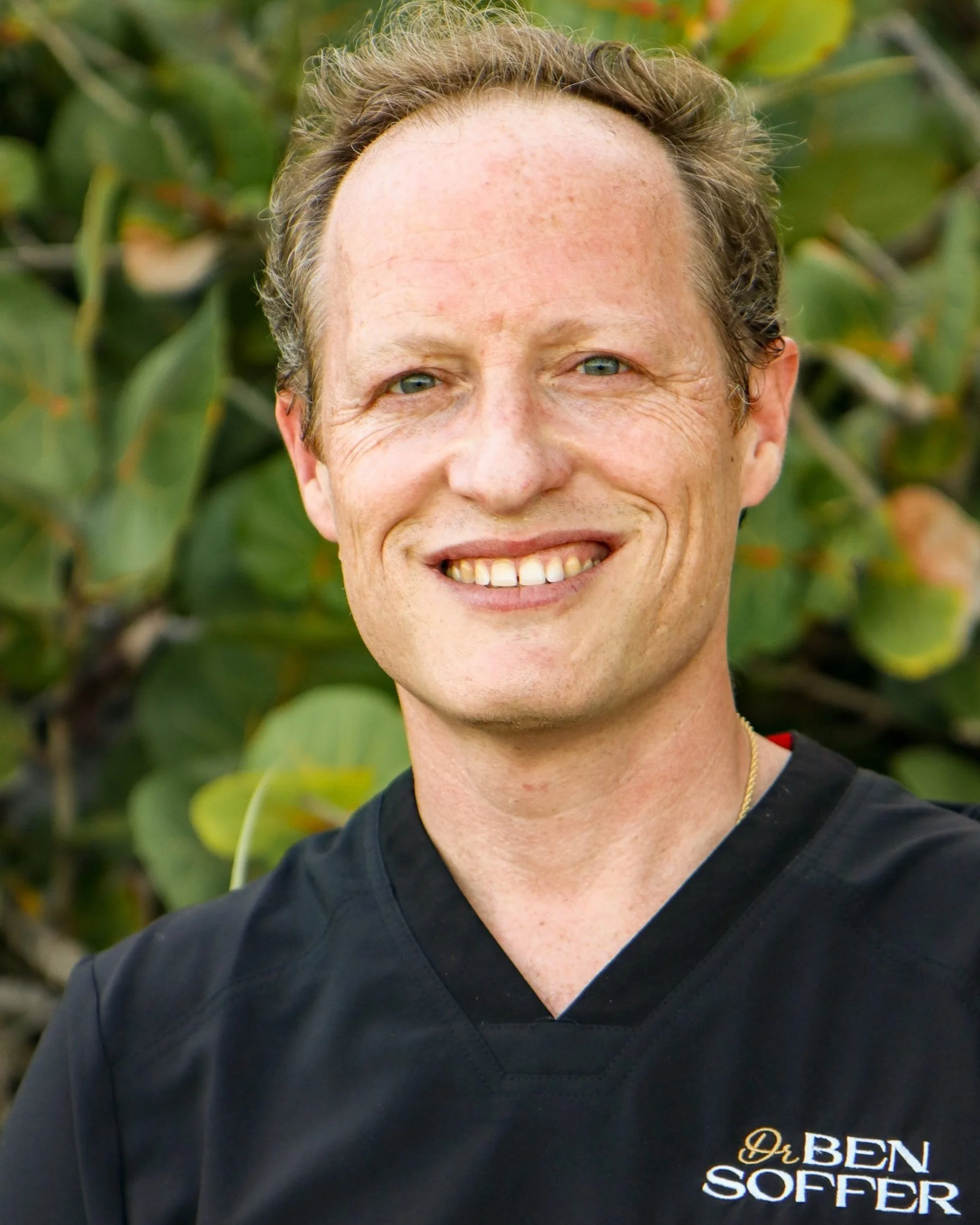
Dr. Ben Soffer is a board-certified physician licensed in Florida, New Jersey, and California. He personally evaluates and treats every Discreet Ketamine patient, and he wrote and reviewed this article to help patients separate the real clinical differences between at-home ketamine programs from the marketing.
Last reviewed August 2026.
What a patient should know first
Ketamine moved from the operating room into at-home care over the past decade because the underlying research held up. In controlled trials going back to 2000, a single sub-anesthetic dose produced a rapid antidepressant effect in people whose depression had not responded to standard medications (Berman 2000; Zarate 2006). A later two-site randomized controlled trial confirmed the effect in treatment-resistant major depression (Murrough 2013), and a meta-analysis found that a single dose can reduce suicidal ideation within hours (Wilkinson 2018). That evidence is the reason legitimate at-home ketamine therapy exists at all.
A few facts are worth holding onto before you compare brands:
- The evidence is strongest for therapeutic, intermittent dosing. The trials above used therapeutic sub-anesthetic doses spaced across sessions, not tiny daily doses.
- Only one form is FDA-approved. Intranasal esketamine (Spravato) is approved for treatment-resistant depression and is given in certified clinics (Daly 2018; U.S. FDA). The compounded oral ketamine that at-home programs use is prescribed off-label.
- Who generally qualifies. Adults with depression, anxiety, PTSD, or chronic pain, without uncontrolled blood pressure, certain cardiac conditions, a history of psychosis, or active substance misuse. See the full contraindications list.
- Realistic cash-pay cost ranges. In-clinic IV infusion induction series run roughly $2,400 to $4,800. At-home telehealth programs are far cheaper, from about $129 per month for daily low-dose plans to around $500 for a first guided-session course. Almost none bill insurance for compounded ketamine, though most accept HSA/FSA.
With that clinical context in place, here is how the three names you keep seeing actually differ. Nue Life has since shut down (more on that below), so the live decision is really between Mindbloom and Joyous, two fundamentally different approaches to treatment. The right one for you depends less on which has the best marketing and more on what you actually need clinically.
Quick summary
| Mindbloom | Joyous | |
|---|---|---|
| Approach | Structured guided sessions | Daily low-dose |
| Typical cost/month | ~$500 (first course) | $129/month |
| Dose per use | Therapeutic (~100-400mg RDT) | Sub-therapeutic (~15-75mg daily) |
| Session structure | Weekly, intentional, 1-hour+ | No formal session |
| Clinical model | Network clinicians | Network clinicians |
| States served (2026) | 34+ | 30+ |
| Integration support | Mostly self-directed | Minimal |
How much do Mindbloom and Joyous cost?
Mindbloom costs about $500 for a first six-session induction course (roughly $80-$100 per session), with lower per-session maintenance pricing afterward; the compounded medication is sometimes billed separately by the pharmacy. Joyous costs a flat $129 per month for its daily low-dose subscription, the cheapest option in this comparison, and less than a third of Mindbloom's first-course cost. Both are cash-pay and HSA/FSA eligible; neither bills insurance for compounded ketamine.
The gap reflects two different products, not two prices for the same thing: Mindbloom's fee buys therapeutic-dose guided sessions with structured integration, while Joyous's buys a daily sub-therapeutic microdose with minimal session structure. For a full price breakdown across every major provider, see the 6-provider cost comparison; for the lowest-cost legitimate options overall, the cheapest ketamine therapy guide.
Mindbloom: Guided sessions with structure
Mindbloom is probably the most recognizable name in at-home ketamine, and it's the closest to what most people picture when they think "telehealth ketamine." You're prescribed sublingual RDT tablets at therapeutic doses, you do structured sessions at home (roughly one a week during the induction course), and each session is designed to be an intentional experience: eye mask, music, reflection afterward.
What works well: The session framework is solid. Mindbloom gives you enough structure that first-time patients don't end up lost in the experience. Their integration content (journaling prompts, reflection tools) is reasonable, and the UI polish is real. Dosing is adjusted across the course.
Where it's thinner: Physician involvement is network-style. You'll typically interact with a different clinician at intake than during follow-up, and the model is designed to scale across many patients per clinician. That's not inherently bad, but for patients who want continuity with a single physician who knows their history, it's a limitation. Price is mid-range at roughly $500 for a first induction course, with maintenance pricing lower.
Best for: Patients who are new to ketamine, want structured sessions with built-in integration scaffolding, and don't have complex medical comorbidities that warrant a single-prescriber relationship.
For a direct comparison with our own program, see Discreet Ketamine vs. Mindbloom.
Joyous: Daily low-dose, a different model entirely
Joyous is the outlier in this comparison, and it's important to understand how different their approach is before you compare numbers. Joyous prescribes a low daily dose of ketamine (typically in the 15 to 75 mg range) which patients take every day, or nearly every day, rather than in weekly therapeutic sessions.
The case for it: At $129/month, it's substantially cheaper than session-based programs. Some patients report real benefit, particularly for chronic low-grade depression and anxiety. The daily-dose model avoids the "big session experience," which matters for patients who find dissociation unpleasant or inconvenient.
The case against it: The clinical evidence base for daily low-dose ketamine is substantially thinner than for therapeutic-dose sessions. The mechanism that produces the durable antidepressant effect (the neuroplasticity window driven by BDNF release at therapeutic doses) may not be reliably triggered at sub-therapeutic daily doses. Daily exposure also raises different long-term questions about tolerance and dependence that session-based protocols avoid by design. This is an open clinical question in 2026, not a settled one.
Best for: Patients who want the lowest-cost option, have mild-to-moderate chronic symptoms, prefer to avoid the session experience, and are willing to be part of what is still, honestly, an unproven long-term treatment model.
Our direct comparison: Discreet Ketamine vs. Joyous.
What happened to Nue Life
Nue Life used to be the third name in this comparison: a premium, coaching-heavy program positioned at the high end of the market. It is no longer operating. After financial trouble in 2023 it was acquired by the venture studio Beckley Waves, and its consumer program has since wound down.
If you're a former Nue Life patient looking for where to go next, one practical note: your prescription history does not transfer automatically. Any new provider will run a fresh evaluation and start you at a standard dose rather than matching your previous one, so bring whatever records you have. The closure is also a useful reminder that provider stability matters when you're mid-treatment, several well-funded ketamine startups have shut down since 2023.
How to actually decide
The question I'd ask a patient trying to pick among these three isn't "which is best." It's "which problem are you solving?"
- Are you solving for cost above all else? Joyous, knowing the caveats.
- Are you solving for "I want a structured session experience and I'm new to this"? Mindbloom.
- Are you solving for continuity, one physician who will know your case start to finish? Smaller single-prescriber programs are built around that, though they typically serve fewer states than the national networks. More on how our own program fits this model further down.
Questions to ask any of them before you commit
Regardless of which provider you're leaning toward, these questions separate good at-home ketamine programs from bad ones:
- Who is the prescribing physician? Will I see the same person at follow-up? A name and a yes/no are the answers you want.
- What is the dosing protocol and how is it adjusted? "Standard for most patients" is not an answer. You want to hear "we titrate based on response and side-effect profile."
- What happens if I have a bad session? Every reputable program has an after-hours protocol. Ask to see it.
- What are the medical contraindications you screen for? See our full contraindications list. A program that doesn't ask about cardiac history, uncontrolled BP, psychosis history, or current substance use is cutting corners.
- What is the actual research evidence for the dosing protocol you're using? Therapeutic-dose sessions (all three of the above except Joyous) have a substantial evidence base. Daily sub-therapeutic dosing does not yet.
Any program that deflects on these questions is one to keep looking past.
The bottom line
Mindbloom is the most polished session-based option. Joyous is the cheapest but represents an unproven clinical model. Neither is wrong; they're solving different problems.
If you're trying to figure out whether any at-home ketamine program is right for you in the first place, start with the contraindications guide, the at-home vs. clinic comparison, and the pricing landscape overview. Those three together will tell you whether this is a realistic next step for your situation, before the question of which provider even comes up.
Where Discreet Ketamine fits
Honest disclosure: I founded Discreet Ketamine and I am the prescribing physician, so read this section as exactly that. We built the practice around the one thing the national networks structurally cannot offer: a single board-certified physician who evaluates you, prescribes for you, and follows you through the whole course. I personally treat every patient. We are deliberately small, available only in Florida, New Jersey, and California, cash-pay, starting at $250 for a 1-month course.
That model is not right for everyone. If you live outside those three states, if you want the polished session scaffolding Mindbloom provides, or if you want the lowest possible monthly price and Joyous fits your symptom profile, one of them may serve you better, and I'll say so.
What our patients say
"Ketamine is helping me confront and address previously buried and inaccessible layers of deep pain and rage and sadness in a safe environment over time. Dr. Ben's expertise and own personal experience has been an invaluable resource on my ongoing journey to live with less suffering."
Moshe, verified patient (Google review)
"Dr. Soffer has been my private care physician for approaching two years. I could not be happier with my decision after a lengthy and somewhat daunting search process. Dr. Soffer is incredibly responsive, caring, and diligent in his work and his patient's needs. Dr. Ben is a 2-for-1, you get a friend + a world-class physician."
Eric Mathias, verified patient (Google review)
"Have to give Dr. Ben Soffer an A+. He's a very caring individual who is focused on me and my well being as a patient when we meet via the internet. Very professional and good with communicating about how I'm doing, side effects if they should occur."
Jack Webb, verified patient (Google review)
Frequently Asked Questions
Is Mindbloom or Joyous better for depression?
It depends on your symptom profile. Mindbloom uses therapeutic-dose weekly sessions, the standard ketamine therapy model with the strongest clinical evidence base for moderate to severe depression. Joyous uses sub-therapeutic daily microdoses, which has a much thinner evidence base but is substantially cheaper. For treatment-resistant depression or significant symptoms, Mindbloom's session-based protocol is more aligned with the research. For chronic mild-to-moderate symptoms where cost is the binding constraint, Joyous is a reasonable but unproven option.
How much does Mindbloom cost in 2026?
Mindbloom's first induction course typically runs around $500, with maintenance pricing lower per session. That covers the network clinician, the prescription, and the structured session content. The compounded medication itself is sometimes billed separately by the pharmacy. Compared to clinic IV infusions ($2,400-4,800 for an induction series) it's substantially cheaper; compared to other at-home programs it's mid-range.
How much does Joyous cost per month?
Joyous is a flat $129 per month for its daily low-dose (microdose) ketamine subscription, billed as an ongoing monthly plan rather than a per-course fee. The price is the same nationwide and covers network-clinician oversight plus the daily sub-therapeutic medication. It is the cheapest option in this comparison, less than a third of Mindbloom's first-course cost, but the low price reflects an unproven daily-dosing model, not a discount on standard therapeutic-dose ketamine.
Is Joyous safe?
Joyous operates within a legal telehealth framework with licensed prescribers, so the regulatory pathway is legitimate. The clinical question is whether daily sub-therapeutic dosing is the right model for ketamine, and that's an open question, not a settled one. The evidence base for therapeutic-dose intermittent sessions is much stronger than the evidence base for daily microdosing. Long-term tolerance and dependence questions that session-based protocols avoid by design are more relevant for daily-dose models.
What's the difference between Joyous and Mindbloom?
The dosing model is the core difference. Mindbloom prescribes therapeutic-dose tablets (~100-400mg) for weekly intentional sessions where you lie down for 60-90 minutes and engage with the dissociative experience. Joyous prescribes sub-therapeutic doses (~15-75mg) for daily use without formal sessions. Mindbloom is closer to the clinical research model; Joyous is a more affordable but less-evidenced alternative.
What happened to Nue Life?
Nue Life was a coaching-heavy at-home ketamine program at the premium end of the market, but it is no longer operating. It ran into financial trouble in 2023, was acquired by the venture studio Beckley Waves, and its consumer program has since wound down. Former patients should know that prescriptions and treatment history do not transfer automatically to a new provider; expect a fresh evaluation and a standard starting dose wherever you go next.
Which at-home ketamine program has the most physician involvement?
Among the major networks (Mindbloom, Joyous, Better U; Innerwell has since closed), the model is similar: network clinicians, often a different person at intake than at follow-up, designed to scale across many patients per clinician. For patients who want a single physician who knows their case start to finish, that continuity is hard to find at network-style scale. Smaller single-prescriber programs like Discreet Ketamine offer that continuity but cover fewer states (Florida, New Jersey, and California only).
Are at-home ketamine programs legitimate?
The reputable ones are. Mindbloom, Joyous, Better U, and Discreet Ketamine all operate as legitimate telemedicine programs with licensed prescribing physicians and U.S. compounding pharmacies (Innerwell ran on the same legitimate model before closing in 2026). The differences are in clinical model, dosing protocol, and patient fit, not in legitimacy. The illegitimate end of the market is "DIY ketamine" sourced from offshore pharmacies without prescription, or providers issuing prescriptions without genuine medical evaluation. Both should be avoided.
Next step
If you're in Florida, New Jersey, or California and want to know whether physician-led at-home ketamine is a fit for your specific clinical picture, the five-minute eligibility check will give you a direct answer. If the answer is no, or if one of the other providers is a better match for you, I'll say so.
Discreet Ketamine provides at-home ketamine therapy to residents of Florida, New Jersey, and California, supervised by Dr. Ben Soffer, a board-certified physician. Compounded racemic ketamine is prescribed off-label for depression, anxiety, PTSD, and chronic pain; it is not FDA-approved for these indications.
References
- Berman RM, et al. Antidepressant effects of ketamine in depressed patients. Biological Psychiatry, 2000. PubMed
- Zarate CA, et al. A randomized trial of an NMDA antagonist in treatment-resistant major depression. Archives of General Psychiatry, 2006. PubMed
- Murrough JW, et al. Antidepressant efficacy of ketamine in treatment-resistant major depression: a two-site randomized controlled trial. American Journal of Psychiatry, 2013. PubMed
- Daly EJ, et al. Efficacy and safety of intranasal esketamine adjunctive to oral antidepressant therapy in treatment-resistant depression. JAMA Psychiatry, 2018. PubMed
- Wilkinson ST, et al. The effect of a single dose of intravenous ketamine on suicidal ideation: a systematic review and meta-analysis. American Journal of Psychiatry, 2018. PubMed
- U.S. Food and Drug Administration. FDA approves new nasal spray medication for treatment-resistant depression; available only at a certified doctor's office or clinic (esketamine, Spravato). FDA
Ready to feel better?
Discreet Ketamine provides at-home ketamine therapy for residents of Florida, New Jersey, and California. Take our 60-second eligibility assessment to see if treatment is right for you.
Check Eligibility